

VR Is a Behavioral Lever, Not a Camera Upgrade
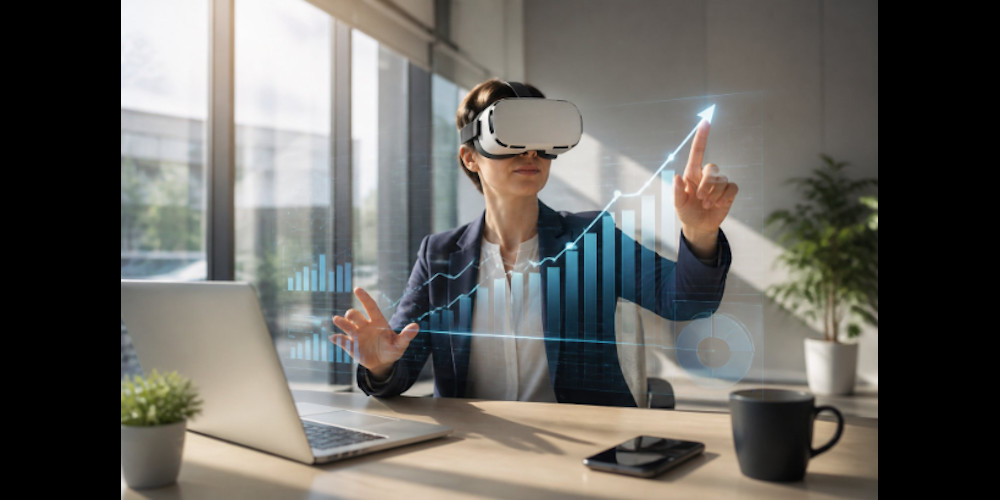
The most commercially significant thing VR does isn’t sharpen the picture, it dissolves the screen. Viewers stop watching a performance and start feeling present inside one, and that single shift, from passive observer to active participant, is what changes spending behavior and makes the business case genuinely compelling.
In a standard 2D show, a top fan may tip once and drift. In a well-executed VR session, that same fan submits more requests, reacts to synchronized moments, and stays until the end. The difference isn’t the camera. It’s the behavioral environment the format creates.
When executed well, VR can materially raise per-fan revenue. Top fans pay premiums for scarce, synchronized moments they can’t get anywhere else. The mechanisms behind that outcome, the presence premium, haptic sync, tiered pricing, and growing headset adoption, are each covered in the sections below.
The primary question is straightforward: will your top 5–10% of fans pay more for synced moments? Run a short test. Design for presence not spectacle, and the economics tend to follow.
The Presence Premium: What It Is and Why It Changes Pricing
When a viewer stops watching from a distance and starts feeling spatially present, their willingness to pay increases. That shift collapses the psychological screen barrier in a way a flat 2D stream never does. Research into immersive environments, including Slater and Wilbur’s foundational 1997 work on presence in VR, suggests this effect is both measurable and consistent across contexts.
Small social gestures like tips, reactions, and requests carry more weight inside that state of presence. Perceived closeness triggers reciprocity in ways a standard cam session rarely does. That’s not a footnote, it’s the core mechanism behind VR camming revenue growth, and most operators miss it entirely.
The pricing model should reflect it accordingly. A viewer inside a synchronized VR moment may tip sooner and request more because the exchange feels mutual rather than transactional. Sell presence as access to scarce, synced moments, not as minutes on a clock.
Moving from 2D to VR Without Overspending
The transition follows a clear sequence: hardware audit, 180° POV production, one interactive layer, then tiered pricing. The early decision that matters most is attention control. A 180° POV angle focuses the viewer’s gaze and sells presence directly. A 360° setup disperses it, the scene loses coherence, and the revenue potential that depends on immersion weakens with it.
Step 1, Hardware audit. Before buying a single camera, confirm which top fans already own headsets or haptic devices. Headset adoption among your paying audience is the single data point most operators never check, and skipping it is the most common cause of wasted early spend. One anonymized operator spent two weeks sourcing a high-end 360° rig before discovering none of her regulars owned compatible headsets. The audit feels like homework. It’s also typically the step that saves the most money.
Step 2, Lighting for depth. Build your set with layered key, fill, and rim lighting to create clear foreground-background separation. Flat light kills depth cues, and without depth cues, there’s nothing immersive to sell.
Step 3, Interactive integration. Design shows around discrete synchronized moments where haptic feedback triggers tips. These moments convert the experience into a transaction rather than leaving it as ambient atmosphere.
Step 4, Tiered pricing rollout. Launch a premium VR tier with gated features, haptic syncs, private follow-ups, extended access, then track where spending concentrates. That concentration tells you exactly how to price the next show.
Practical Execution: Beginners and Advanced Operators
Every tactical choice here comes back to the same goal: structuring shows to sell presence, not time.
Beginners: Record three short 180° POV clips and price access at a clear premium. The purpose is price-elasticity discovery, not production polish. Don’t invest in streaming infrastructure until fans have demonstrated what they’ll actually pay. Whether your top 5–10% of viewers will pay more for synced moments often answers itself within a three-clip test.
Advanced operators: Structure shows so the highest-priced moments align with haptic feedback windows. Market those windows as scarce, bookable slots, limited availability at a fixed premium signals exclusivity and typically drives real commitment from top spenders. Apply dynamic pricing across repeat shows: raise rates on segments that sold out quickly, and introduce tiered access so returning viewers have a clear reason to upgrade. This concentrates earnings into predictable micro-experiences and builds the repeat-buyer behavior that compounds over time.
Most operators who struggle with this aren’t the least technical. They’re the ones trying to perfect everything before going live.
Monetization Structures That Capture the Presence Premium
VR camming revenue diverges from standard cam pricing at one key point: the scarce synchronized moment, not show length, sets the ceiling. Sell those moments as discrete premium experiences within a show rather than blocks of time. Scarcity is the lever. Limited, bookable synced segments lift perceived value and drive higher bids.
Operators who bundle hardware access, through rentals, vendor partnerships, or affiliate arrangements, often capture a larger share of that presence premium than those who leave the hardware question entirely to the viewer. In practice, that’s a meaningful difference in earning potential.
Listing with a distributor such as vrcams.io can aggregate audiences of compatible-hardware owners in one place (evaluate independently before committing).
Common Mistakes That Kill Presence and Revenue
- Problem, Using 360° cameras for monetized shows: disperses viewer attention and wastes bandwidth, breaking the immersive effect entirely. Fix: Default to 180° POV production for all premium sessions.
- Problem, Flat lighting that kills 3D depth: if the scene looks flat, the sense of being there disappears and tips dry up. Fix: Use layered key, fill, and rim lighting to restore foreground-background separation.
- Problem, Ignoring latency thresholds: even modest sync lag wrecks the haptic illusion, a failure mode sometimes called the teledildonics sync problem, and otherwise solid setups have failed for exactly this reason. Fix: Test end-to-end round-trip latency before every premium show.
Suggested original visual: latency vs. conversion quality chart showing how tip rates degrade as round-trip latency climbs past key thresholds in live VR cam sessions [alt text: “Line chart showing tip rate decline as round-trip latency increases beyond 80 ms in live VR cam sessions”]
Technical Thresholds Worth Knowing
Latency is the make-or-break variable in any VR camming setup. The ranges below come from vendor specifications and anonymized pilot work covering 2022–2024. Verify with your hardware and platform vendors before each deployment.
- Latency (round trip): aim for under 80–100 ms. Beyond 150 ms, the teledildonics illusion fails in most setups, haptic sync breaks down and the stream loses realism fast. Round-trip latency includes device processing, network transit, and platform delivery combined; all three matter.
- Jitter: keep under 30 ms to avoid uneven feedback timing. Even brief spikes disrupt the rhythmic consistency that synced moments depend on.
- Bandwidth (180° POV production): target 4–8 Mbps upstream per stream. 360° and higher resolutions multiply that figure significantly.
- Monitoring: run continuous latency and packet-loss checks during premium shows. Small degradations typically kill conversion quickly, often before the creator notices anything is wrong.
On paper, those bandwidth figures look manageable. In practice, network variability during peak hours regularly pushes setups past comfortable thresholds, particularly on shared connections. Test your connection under realistic load before show night.
VR as a Competitive Moat
VR raises the entry barrier through hardware, training, and coordination. That friction is commercially valuable.
Most operators still think about growth in terms of reach. The economics of immersive camming reward the opposite: depth over breadth, a smaller group of committed, high-spending regulars over a wide, low-yield audience. Generalist competitors struggle to replicate that, not because they can’t buy the gear, but because audience loyalty takes time to build and can’t be rushed. Higher spend per viewer from a tighter audience typically outperforms chasing volume. That’s a structural advantage, not a tactical one.
What to Do Next
Expect concentrated revenue: a small audience delivering high yield. A profitable VR lane typically means fewer fans paying meaningfully more per minute for exclusive synced segments. Per-minute lifts tend to cluster around short, synced moments rather than spread evenly across a full show. Headset adoption among top-tier fans remains the primary limiting factor, which is why early pilots work best with a pre-screened core audience.
ARPU uplift, average revenue per user, is where the VR premium becomes measurable. Two illustrative scenarios drawn from anonymized pilots and vendor guidance show how that can play out.
Conservative pilot scenario: Assume 1, 000 paying fans, with the top 5% (50 fans) already spending roughly $10 per show. At a conservative uplift of 50–100% for those 50 fans, per-show VR revenue from that segment rises from $500 to $750–$1, 000. On a base of $10, 000 total show revenue, that’s a 2.5–5% lift, modest, but it adds up fast on a weekly schedule. These figures are illustrative; individual results will vary.
Aggressive pilot scenario: Same baseline, but top fans respond strongly to haptic sync and exclusive access. An uplift of 150–300% pushes that top-5% segment from $500 to $1, 250–$2, 000 per show, raising total show revenue by roughly 7.5–15%. At that level, a dedicated VR tier starts to pay for its infrastructure within a few months. Treat this as a planning range, not a guaranteed outcome.
Before committing further budget, run your pilot data against a simple decision framework:
- Low signal fewer than expected premium-tier conversions after 3–5 shows, minimal repeat attendance: reprice access, simplify the sync mechanic, or test a different show format before spending more on infrastructure.
- Medium signal conversion is present but inconsistent across shows: audit latency logs, review session length, and survey top fans directly. The offer may be right; execution usually needs tightening.
- Strong signal repeat buyers, rising per-session revenue, unprompted referrals: expand capacity, add a second VR tier, and build a waitlist to create scarcity.
Allow 4–8 weeks and 3–10 premium shows, roughly 100–300 paid passes depending on audience size, before drawing conclusions. Shorter windows produce misleading reads. The predictable failure modes are familiar: buying expensive 360° hardware before testing demand, underpricing VR access so the presence premium is never actually captured, and underestimating what latency does to the experience. If pilots show weak demand after a fair run, reallocate the budget rather than doubling down.