


FIRST AMENDMENT FOCUS
As 2002 dawns, the adult Internet community continues to thrive. According to scientist Larry Roberts, one of the creators of the ARPANET, the ancestor of the Internet, traffic is still tripling annually, and is predicted to expand until the end of the decade.FIRST AMENDMENT FOCUS
As 2002 dawns, the adult Internet community continues to thrive. According to scientist Larry Roberts, one of the creators of the ARPANET, the ancestor of the Internet, traffic is still tripling annually, and is predicted to expand until the end of the decade. (Kevin Featherly, “Annual Internet Growth Still Tripling Annually,” YNOT Masters, January 17, 2002). New players are entering the field on a regular basis-a good percentage of the calls to my office seeking representation are from start ups or new providers, expressing a proper concern that they need help in complying with all the legal regulations impacting upon the business. Similarly, at the Internext Conference just a few weeks ago, many of the attendees were likewise newcomers to the field. In short, a surprisingly good start to a year framed by a troubled economy and a nation at war.
True enough, but the legal environment has been dramatically altered by the appointment of John Ashcroft as Attorney General, and by his appointment on November 14, 2001 of Andrew Oosterbaan as Chief of the Child Exploitation and Obscenity Section of the Criminal Division of the Department of Justice (“CEOS”). The Attorney General indicated in a press release announcing the appointment that it “should put on notice those who seek to exploit children or violate our nation’s obscenity laws will be punished to the fullest extent of the law.” (US DOJ Press Release 01-593). Where the Clinton Administration was content, on the whole, to prioritize prosecution of child pornography and to de-emphasize obscenity prosecution of materials for adults by adults and involving adults, Attorney General Ashcroft has testified before Congress that he “would hope to” compile a better record than did the Clinton Administration in bringing and winning obscenity prosecutions (Tr. of June 6, 2001 hearing at 16), as well as in meeting with “family values” advocates in the summer of 2001. Any hope that the events of September 11 have blunted the Attorney General’s zeal should be dashed by the comments regarding the appointment of Mr. Oosterbaan. Moreover, as the Department of Justice website section devoted to CEOS’s role in obscenity prosecutions states, “Our resources are well suited for the prosecution of Internet related obscenity cases.”
The Department of Justice, even before the change of administrations, was willing to allow prosecutions of obscenity unrelated to child protection issues. As the November 2000 edition of the United States Attorney’s Manual stated:
Prosecution of large scale distributors of obscene material who realize substantial income from their multi-state operations also is encouraged. Prosecution priority should be given to cases in which there is evidence of involvement by known organized crime figures. However, prosecution of cases involving relatively small distributors can have a deterrent effect and would dispel any notion that obscenity distributors are insulated from prosecution if their operations fail to exceed a predetermined size or if they fragment their business into small-scale operations. Therefore, prosecution of such distributors also may be appropriate on a case-by-case basis. USAM Sec. 9-75.020 (11/2000).
In other words, prosecutors are encouraged to search out producers both large and small and to deliver the message: the cease-fire is over.
One problem with prosecuting Internet cases is applying the definition of what is obscene crafted by the Supreme Court in a pre-Internet world. As the US Attorney’s Manual accurately sets out, material is only eligible for prosecution if it is patently offensive under local community standards. “Local,” by the way, means really local: not a state-by-state or even a city-by-city definition of community, but actually neighborhood by neighborhood. With material being posted from one locality being available to Internet users throughout the world, how to choose which community’s standard will be applied to judge Internetcontent is an open question.
This poses a difficulty to Internet providers that the video, film or print media do not face. In fact, the fluid and unpredictable nature of what the applicable community is has helped producers of more traditional media win surprise verdicts, by focusing on the more sex-positive neighborhoods in which they frequently retail. This happened in the 1999 Utah County trial of Larry Peterman where the defense persuaded a jury by comparing materials available in hotels in the tourist section of Provo to construct a more liberal community standard. Of course it helped in the Peterman case that what he sold was comparable to the soft-core content of most motel-provided videos. But such cases involve a definable locality, and theoretically a standard to which the retailer can tailor his or her stock.
Even acquittals, however, come with a tremendous cost, both financial (attorneys fees really rack up when a case goes to trial or appeal) and psychic, in the form of the fear of conviction or sentence. The need for clarity in the law is as much to prevent prosecutions from happening at all as it is a function of the need to win cases. Many providers have found themselves acquitted but bankrupt, after literally years of fear of incarceration.
With the Internet, however, an ambitious or moralistic United States Attorney could try to apply conservative local standards to materials devised for more cutting-edge communities. Indeed, in one of the few Clinton-era obscenity cases, United States v. Thomas, a California couple, Robert and Carleen Thomas, were convicted on federal obscenity charges because their California-based BBS was judged to offend the community standards of the Western District of Tennessee, where one of their members resided. The Sixth Circuit Court of Appeals upheld that conviction in 1996. (Reported in volume 74 of the Federal Reporter, third series (74 F.3d) at page 701. See http://www.jmls.edu/cyber/cases/thomas.html for the full text of the opinion.)
The Department of Justice is awake to the non-geographic nature of the Internet, and has reached a position as to how to judge the material available on it: like the Sixth Circuit Court of Appeals in Thomas the Department of Justice asserts that any community that can access materials on the Web has the right to hold that material to its standards. In litigating Ashcroft v. ACLU, the Child Online Protection Act case presently pending before the Supreme Court, the Department of Justice has argued just that point. (As will be explained in Part Two, because COPA involves a statute aimed at speech which is “harmful to minors” and directed at them, that case will not settle how local community standards will be applied to adult-directed speech.)
The over-arching problem confronting the Internet content-provider who wants to obey the law but deliver adult content to adults is exactly this: does the application of obscenity law to the Internet mean that webmasters have to conform to the standards of the most conservative area of the country? Of the World? While the Department of Justice thinks so, at least one court doesn’t. And the Supreme Court itself has suggested that such a result would be too limiting of free speech on the Internet.
NEXT: Seizing the Initiative: A Challenge to Censorship
AND THEN: What’s A Provider to Do?
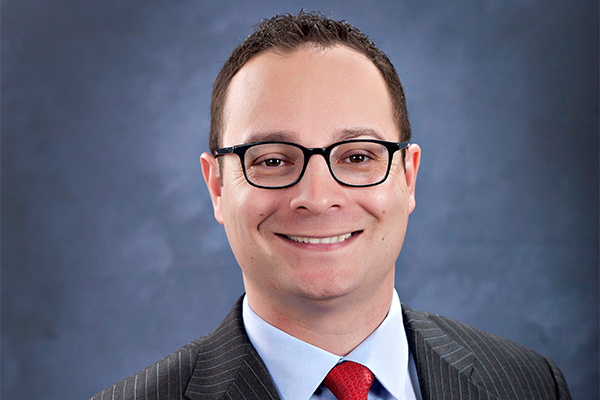
John Wirenius is a New York-based attorney with the civil rights-civil liberties firm Leeds, Morelli & Brown, P.C. John specializes in free speech, Internet and entertainment law and criminal defense. John has written extensively regarding these areas, and is the author of FIRST AMENDMENT, FIRST PRINCIPLES: VERBAL ACTS AND FREEDOM OF SPEECH. Contact him at JWirenius@lmblaw.com, or at (516) 873-9550.