


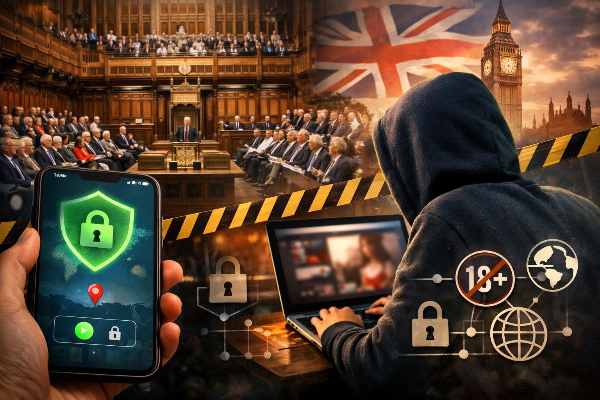
UK lawmakers are calling for increased scrutiny of virtual private networks following concerns that users are bypassing age verification measures required under the Online Safety Act. Members of Parliament from multiple parties raised questions about VPN regulation during a recent parliamentary debate on the legislation.
Peter Fortune, Conservative MP for Bromley and Biggin Hill, questioned why VPNs are not subject to compliance requirements for age verification measures. He argued that VPN companies should bear responsibility for ensuring compliance with the law, as these services can obscure users’ actual locations from websites.
Virtual private networks encrypt internet traffic and route it through servers in different locations, allowing users to mask their true geographic location and appear to be browsing from another country. Originally designed for corporate security and privacy protection, VPNs have become increasingly popular among consumers seeking to bypass geographic restrictions on content or, in this case, age verification requirements that apply only in specific jurisdictions.
Digital Government and Data Minister Ian Murray indicated the government is monitoring VPN usage and would consider further interventions if necessary. The regulator Ofcom is currently assessing how VPN services are being used in relation to the Online Safety Act.
Research by digital safety organization Childnet found increased VPN adoption among young users following the act’s implementation. The survey of 2,018 children aged 8 to 17 revealed that 23% of VPN users began using the technology within three months of the Online Safety Act taking effect.
Of the 432 children reporting VPN use, 38% said they used the services to protect privacy and stay safe online. However, 10% indicated they used VPNs to access age-inappropriate content, the research found.
Daily VPN downloads in the UK peaked at 1.2 million following the Online Safety Act’s introduction, compared to 650,000 before the legislation. The figure declined to 900,000 in November but remained above pre-act levels.
Any future restrictions on VPN services could significantly impact both adult entertainment workers and consumers. Content creators who rely on platforms with geographic restrictions might face reduced access to international audiences, potentially affecting their income streams. Meanwhile, adult entertainment consumers who use VPNs for privacy reasons beyond age verification circumvention could find their access to legal content restricted, raising broader questions about digital privacy rights.
Murray stated that VPN-related issues would be examined as part of a government review of the Online Safety Act, though he indicated the review would not be completed before 2029. The minister reiterated the Labour government’s position against repealing the legislation despite a petition that gathered more than 550,000 signatures calling for its repeal.